The hazard of human infection for those exposed to the sea has been known for a long time, but the public is becoming more aware of it as new evidence of the oceans’ rapidly deteriorating health emerges. Even the most pristine seawaters are inhabited by large numbers of microbes.
Most of them are harmless to humans, but some, like the vibrio species, can make people sick or even kill them. Increased pollution, warming and acidification of the oceans, all of which cause the death and extinction of fish and coral species, also promote the growth of indigenous microbes and increase the concentrations of terrestrial pathogens. Pollution and microbial hazards are greatest in coastal waters; unfortunately, this is where most recreational activities occur.
Routes of Infection
Indigenous and introduced microbes may cause illness in humans either by infection or indirectly by intoxication. The sheer volume of seawater and its constant movement usually dilute foreign microbes below concentrations necessary for human infection. But there are many conditions when critical concentrations may be reached or when the threshold for infection in an individual is lowered. The greatest risk for human health comes from consumption of seafood.
Human potential for contracting diseases from pathogens in the marine environment depends on exposure time, the virulence of the pathogens and the susceptibility of the individual. Microbes generally infect humans through ingestion, inhalation or mucous-membrane exposure (naturally occurring or in wounds). Microbes can infect through injured skin, the ears and the mucosa of the mouth, eyes and nose. Infections may also result from swallowing water. Nonfatal drowning in marine environments brings seawater into the lungs and can result in pneumonia. Some hazards like aerosolized bacteria, generated in coastal environments by wave activity, can transmit algal toxins to humans and cause viruses to become airborne. This type of hazard is less likely to cause illness in divers than swimmers, thanks to masks and regulators.
Risk of direct infection by microbes from seawater is very small. However, the risk increases significantly in warm, brackish waters, in waters proximate to sewage and run-off inlets, at places of animal access and at populated beaches Divers may acquire dive-specific infectious diseases from exposure to the marine environment or as a result of close contact with other people and their dive equipment. If equipment is not properly cleaned, dried and stored after use, colonies can grow and microbes can reach sufficient numbers to infect users. Paradoxically, efforts to protect equipment from the corrosive effect of sea salt may also result in unwanted risks to divers’ health.
Communal Culprits
Most dive operations offer some kind of communal fresh-water tank for the postdive rinsing of equipment. Generally there are tanks for rinsing wetsuits, masks, boots, regulators and buoyancy compensation devices (BCDs) along with separate tanks for photo equipment. Despite the best of intentions, such a system may demonstrate more care for camera equipment than for human health. The volume of dive gear passing through rinse tanks in a day may significantly exceed the volume of water in it. Because of the inequity, rinse tanks become the means for collecting and concentrating microbes from all users, creating the potential for spreading infections among them.
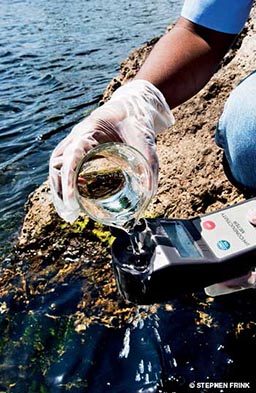
In 2007, a research team under Michael Miller of West Virginia University embarked on a study to sample water from communal rinse tanks and check it for the presence of bacteria. The first test was conducted at a popular Caribbean dive destination. For four days, the team collected daily water samples from communal rinse tanks after they were first filled in the morning and again several times throughout the day. They divided small amounts of the water samples onto agar plates and subsequently observed bacterial growth of different morphologies and swimming patterns. They did not attempt to identify the bacteria during this phase of the study and, therefore, did not determine if any were harmful to humans. This preliminary research simply confirmed the possibility of significant bacterial presence in rinse tanks.
Several months later, a similar study was undertaken at a dive facility on another Caribbean island. The operation’s two boats each had two rinse tanks: one for wetsuits and BCDs and another for masks and regulators. The operator fully cooperated with the study; for five days the wetsuit tanks were drained each morning, and one of them was cleaned with bleach before they were refilled. The team took water samples from both tanks at that point and again at multiple times throughout the day.
Notably, this facility also allowed the sampling of water from the pipes used to fill the tanks, an opportunity not previously afforded the team. Tests showed the water used to fill the tanks was free of bacteria, nor were bacteria detected in either tank immediately after they were filled in the morning. However, by the afternoon all three tanks contained a lot of bacteria of many different types. Precleaning with bleach did not impact bacterial contamination. The two mask rinse tanks on the boats were also sampled, and both of these contained very high levels of various, unidentified types of bacteria. The time pattern of the findings indicated the bacteria were rinsed off of the diving equipment, but it remained unknown whether they originated from the sea or from divers as well as if they were pathogenic.
Finding the Answer
In June 2008, the team performed a third study with the aim of identifying bacteria in rinse tanks along with their source. The study was done at yet another Caribbean dive resort. Water samples were collected from the hose used to fill a communal rinse tank, the rinse tank itself, buckets on the boats in which masks were rinsed and stored, several dive sites in the ocean at various depths and, finally, ocean water near shore at the dive facility. Again, the water used to fill the rinse tanks was found to be safe. But this time the bacteria that developed throughout the day were identified, confirming that some likely originated from the ocean and others from the divers themselves.
None of the identified bacteria would be considered overt human pathogens, but some are considered opportunistic pathogens: They could infect individuals with compromised immune systems or may infect open wounds. Bacteria identified in the communal rinse tanks are generally associated with unsanitary conditions. Where these bacteria are present, other pathogenic bacteria may occasionally occur. The scope of the study did not include checking for viruses usually found along with bacteria that may cause serious diseases.
In the Eye of the Infected
In March 2006, a group of 27 health-care providers attended a conference at a dive resort in the South Pacific. On the second day of diving, two divers reported eye problems, and over the next few days 13 divers (roughly half of the group) were diagnosed with conjunctivitis, an inflammation of the eye. It is characterized by the sensation of a foreign body in the eye, redness of the mucosa and possible discharge. Conjunctivitis of viral or bacterial origin spreads easily from person to person through close contact. There was an outbreak of conjunctivitis among the local population, but the divers did not have much contact with them.
Two physicians from the group investigated the spread of the conjunctivitis among the divers. They concluded the conjunctivitis originated from a divemaster who had an eye infection prior to the diver outbreak. The divemaster placed his mask in a communal container of diving masks, which apparently became the means by which conjunctivitis was spread among the divers. Only divers who used this tank were infected. Those who did not use the tank were not infected despite close contact with those who were.
To prevent further spread of infection, divers used bleach and detergent for mask cleaning. Affected divers received antibiotic drops and ointments and were healed in the next several days. One diver manifested symptoms after returning home. This case study demonstrated that disease can be spread among divers using communal rinse and storage containers. Conjunctivitis is a disease with short delay from infection to symptom manifestation, which made it possible to identify the source of infection. Other infections may have been transmitted by the same means, but due to longer periods of incubation as well as occurrences after the divers returned home, the link to communal tank was missed.
Based on the lack of reports, the risk of infection by means of communal rinse tanks appears negligible, however, it’s possible divers incorrectly attribute such infections to other sources. Miller’s findings and the report of the conjunctivitis outbreak indicate communal rinse tanks may serve as avenues of infection transmission between divers. When it comes to rinsing dive equipment in direct contact with divers’ skin and mucous membranes, such as masks and regulators, instead of using communal rinse tanks, divers are advised to clean gear using disinfectants under running water.
Other Areas of Consideration
Besides rinse tanks, there are at least three additional areas in which infections may spread among divers: the common, the rare but dangerous and the feared but unlikely. The most common infections reported in diving are otitis externa (swimmer’s ear) and skin infections (impetigo and others). Fortunately, these can be easily prevented, diagnosed and successfully treated.
On the other hand, diving or swimming with an open wound may result in a rare, but often fatal, infection with Vibrio vulnificus, an opportunistic pathogen commonly found in warm coastal waters. The Centers for Disease Control and Prevention receive approximately 150 reports each year of people infected with V. vulnificus, most by eating oysters and a few through open wounds.
Some divers fear sinusitis and cystitis (bladder infection). Indeed, swimmer’s sinusitis has disrupted the careers of many aspiring athletes. However, it is most often caused not by microbial infections but by chemical irritation from chlorine used to disinfect pool water. It does not occur in ocean swimming. Indeed, some people with chronic sinusitis maintain that swimming in the sea and flooding their sinuses with salt water helps, a notion seemingly supported by an increasing number of ear, nose and throat physicians who advise patients to use saline sinus rinses to relieve nasal and sinus congestion. However, it’s important to remember that the intentional or inadvertent introduction of seawater into the sinuses could cause infection if the introduced water is loaded with a sufficient number of pathogenic bacteria or viruses. It is difficult to come by any such cases in conventional medicine literature.
The effect of swimming on cystitis in women is a popular topic of discussion in the media. The prevalence of cystitis is very high, and in many cases it is recurrent. Each occurrence often is the result of infection by a new causative microbe. Chemical irritation from chlorinated water or the prolonged wearing of a wet swimsuit may enhance the recurrence of cystitis, regardless of the bacterial contamination of fresh or salt water. When it comes to cystitis, it may be a predisposition rather than a specific causation that affects its occurrence.
Putting it in Perspective
While it seems there are many microbial hazards in the sea, the true risk of serious infection to divers seems negligible. Most infections that may be occurring among beachgoers, swimmers and divers probably manifest as diarrhea, but that is so common among travelers it is rarely linked to seawater. The two most common infections in divers are ear and skin infections.
To mitigate risks of infection while diving, regularly clean and disinfect equipment, avoid polluted waters, never dive with open wounds (including tooth extractions) or sores, never rinse your mouth or sinus cavities with seawater, keep your ears dry, avoid prolonged wearing of wet clothing and shower after diving. Divers with an acute infection such as a common cold, conjunctivitis, skin infection or gastroenteritis are not fit to dive and must take precautions not to infect others.
Beach Bacteria
Waterborne disease outbreaks (WBDO) have been reported in people bathing in pools and rivers but not among seaside beachgoers. However, due to presence of the diarrhea-causing microbes on seaside beaches, epidemiologists assume that cases of gastroenteritis resulting from exposure to marine pathogens must be common, too. The summertime increase in occurences of gastroenteritis in coastal states indicates a possible role of beaches in disease transmission.
In 2009 and 2010, scientists discovered methicilin-resistant staphylococcus aureus (MRSA) in the sand of many beaches on both the West and East coasts. MRSA causes intrahospital infections with a high mortality rate due to its resistance to many antibiotics. MRSA also occurs outside of hospitals, but the source of infection is not known. Seasonal increases in MRSA infections coinciding with times of increased beach use may indicate beaches are a possible means of MRSA transmission.
© Alert Diver — Q4 Fall 2011