Today, when a diver takes a giant stride or heads out into the surf, they know that if something happens, there is a group dedicated to helping them respond in an emergency, get to the hospital or chamber safely, and to provide guidance to first responders and medical professionals all along the way. Divers have known – every day for the past 40 years – that medical information and emergency support are just a phone call away.
The medical emergency hotline has been operational for 325,000+ hours during which Divers Alert Network (DAN) medics have fielded more than 50,000 dive emergency calls.
But that was not always the case.
Before DAN, injured divers often faced significant delays in receiving appropriate treatment – which as we know today, time is of the essence when responding to a dive injury. Very few physicians in the United States were trained in dive medicine, and recompression facilities were not generally equipped for emergency cases involving recreational divers.
As more people sought to work and play beneath the sea, the need for improved medical education for diving injury response became critical.
Responding to the need to help divers in need
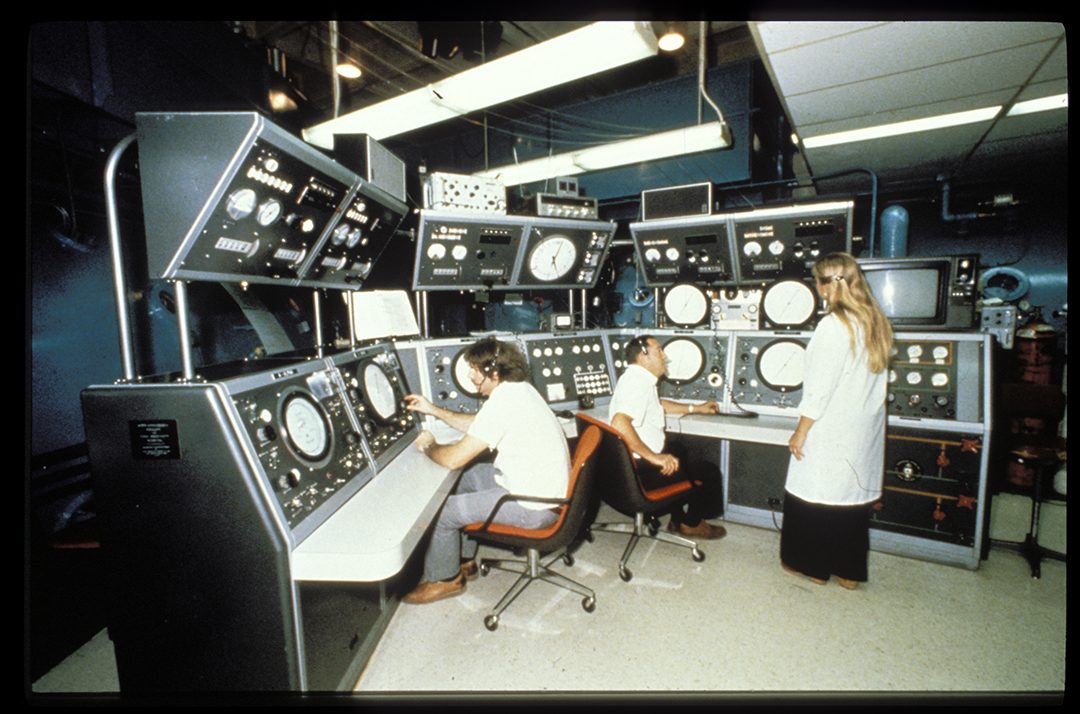
In 1980, the U.S. military partnered with governmental organizations and the Undersea Medical Society to found the National Diving Accident Network (NaDAN) at Duke University Medical Center. NaDAN – later to become DAN – was tasked with developing a 24-hour emergency hotline to field calls from injured divers.
As DAN continued to expand its support of the diving industry, calls tripled year over year, many of which were non-emergency calls. So, DAN developed the medical information line (+1-919-684-2948), where divers can call and ask about medical conditions, medications, surgeries, dental issues, or even just consultations regarding dive safety.
The initial grant funding ended three years later, prompting DAN to transform into a membership organization to continue funding the emergency and medical information lines as well as research into medical interventions and safety guidelines.
That same year, DAN began to publish Alert Diver. The first edition was an 8-page newsletter, that has since grown to be the widest circulated diving publication featuring 116-pages brimming with safety guidelines and scenarios, FAQs, scientific insights, and inspiration for every kind of diver.
In 1987, DAN took the next step in protecting the dive community – helping divers afford the costly treatments associated with diving injuries. Directing divers to the specific therapeutics required to address dive injuries such as decompression sickness – while lifesaving – is incredibly expensive. DAN established the first dive accident insurance program, which too, has grown over the years. Today, the DAN insurance program offers three tiers of options to cover divers in the event of injury as well as up to US$150,000 of emergency evacuation assistance to help divers get from their remote destinations to the care they need. DAN has also expanded its offerings to include travel insurance, helping divers cover all their adventures whether they are diving or not.
DAN became a 501(c)(3) nonprofit organization in 1990 launching DAN’s official mission: to help divers in need of medical emergency assistance and promote dive safety through research, education, products, and services.
Three decades later, the organization remains dedicated to this mission as they strive to make every dive accident- and injury-free.
Promoting dive safety through research and education
In 1991, DAN research revealed that only one-third of injured divers were receiving emergency oxygen first aid despite evidence that emergency oxygen drastically improves outcomes for diving injuries. In response, DAN launched the Oxygen First Aid training program, teaching divers to administer lifesaving first aid onsite. DAN expanded this initiative in 2000 with the establishment of the oxygen grant program to helps increase the prevalence of emergency oxygen in the field by subsidizing equipment for public safety organizations as well as dive professionals.
Building on this success of applying research to practical application, DAN initiated a series of experiments designed to refine the flying after diving recommendations. These experiments laid the foundation for today’s current guidelines and are followed by recreational divers worldwide. Similarly, in partnership with the Undersea and Hyperbaric Medical Society (UHMS), DAN has established guidelines for diving with diabetes as well as interventions for preventing decompression sickness for divers with patent foramen ovale (PFO).
DAN has spent decades exploring decompression illness (DCI) and diving fatalities to get a deeper understanding of the core causes of death and to identify preventative measures. These research initiatives are supported by the diving community. For instance, Project Dive Exploration involved collecting data from nearly 200,000 dives over 16 years and has led to critical insights into DCI. DAN has also established diving fatalities studies and workshops to identify trends and interventions. Divers can contribute to this research by submitting reports on scuba diving, breath hold diving, and rebreather diving incidents and fatalities online through the DAN Diving Incident Reporting system.
Over the years, DAN expanded its educational scope to include working with chambers that respond to divers, ensuring facilities are fully equipped to care for the community. Through the Recompression Chamber Assistance Program, DAN dispatches physicians and technical experts to more than 150 participating chambers to provide assessments, recommendations, and financial aid.
DAN also founded an internship program to foster young, aspiring dive researchers helping them gain valuable, hands-on experience assisting in field work, lab studies, training programs, and dive safety education. Since the program first launched in 1999, DAN has invested more than US$1 million and hosted more than 100 interns.
DAN was founded to protect and support divers in their time of need. Over the past four decades, it has addressed the hazards presented at each stage of care through research, training, education, products, and services. Today, each time a diver submerges, they know they have the information available to keep them safe and a network of support should the unthinkable occur.